What do the Freemasons have to do with the Knights Templar? Nothing that can be documented — and the story has a traceable birthday
This is a fair question and it gets a straight answer
People ask it constantly, and they ask it for a good reason: there is a Templar castle on this hill, there are crosses on every wall, and the internet has spent two centuries telling them the two things are connected. Nobody deserves to be sneered at for arriving with that in their head. What follows is what the sources actually establish, and the most useful corrections in it come from Masonic bodies talking about themselves.
Where Freemasonry actually comes from
The United Grand Lodge of England’s own history page says that theories range “from ancient builders to medieval stonemasons”, and then commits: “the general consensus among Masonic scholars is that they lie with the medieval stonemasons that built our castles and cathedrals”, and that early Freemasons “were influenced by the legends, imagery and customs of medieval stonemasons”.
The documentary record starts in Scotland. William Schaw, Warden General and Principal Master of Work to the Crown in Scotland, issued the regulations known as the Schaw Statutes in the 1590s, the second set of which told lodges to employ a notary as secretary and record their transactions — which is why there is a record at all. The first recorded admission of non-masons to a lodge is at Edinburgh in the 1630s; Sir Robert Moray’s initiation, the earliest on English soil, follows in the 1640s, and Elias Ashmole’s at Warrington a few years later. The Constitutions of the Free-Masons, edited by the presbyterian clergyman James Anderson, is published in the 1720s.
The standard academic work carries the thesis in its subtitle: David Stevenson’s The Origins of Freemasonry: Scotland’s Century, and the century it means is the one running from the Schaw Statutes to the years just before the first Grand Lodge. The formative period is Scottish, and it begins nearly three hundred years after the Templars were suppressed.
And the founding moment the institution itself claims, in its own words: “On St John’s Day, 24 June 1717, four London Lodges, which had existed for some time, came together at the Goose and Gridiron Tavern in St Paul’s Churchyard, declared themselves a Grand Lodge and elected Anthony Sayer as their first Grand Master. This was the first Grand Lodge in the world.” Note what that page does not contain: the Knights Templar are not mentioned on it at all.
The gap, as subtraction
| From | To | Gap |
|---|---|---|
| Vox in excelso dissolves the Templars, 1312 | First Grand Lodge, 1717 | Four hundred and five years |
| Jacques de Molay burned, 1314 | Ramsay’s oration, 1736/37 | More than four centuries |
| Vox in excelso, 1312 | Ramsay’s oration, 1736/37 | Four hundred and twenty-five years |
| Ramsay’s oration, 1736/37 | Wilhelmsbad renunciation, 1782 | Forty-five years |
| The Charola begun, 1160 | First Grand Lodge, 1717 | Five hundred and fifty-seven years |
Read the last two rows together: the claim was asserted four and a quarter centuries after the suppression, and abandoned by its own promoters forty-five years later.
What sits in that four-hundred-year gap, documentarily, is nothing. Not evidence that has been weighed and found wanting — simply no continuous chain of any kind between the dissolution of the Templars and the Masonic lodges of the 1730s.
Ramsay did not say Templars, and a Masonic body says so
This is the strongest single point on the page. Andrew Michael Ramsay’s oration — the 1736/37 text, which exists in a manuscript version and a printed one — is the document usually blamed for the whole idea. It says: “Our ancestors, the Crusaders, gathered together from all parts of Christendom in the Holy Land.” Crusaders. Not Templars.
Worse for the legend: the only order Ramsay actually names is a different one. “Some time afterwards our Order formed an intimate union with the Knights of St John of Jerusalem.” The Knights of St John are the Hospitallers — the order that received the Templars’ property in 1312, and their rivals in the story. The Knights Templar are not mentioned in the text anywhere.
The Scottish Rite of Freemasonry says as much in its own words: “Eventually Ramsay’s ‘Crusaders’ morphed into the Knights Templar” — afterwards, by later theorists. And on where the whole knightly idea starts, its verdict is that in the absence of the slightest hint of any knightly connection with Freemasonry before the oration, “the nod must go to Ramsay’s Oration”.
The founding document of “Masons descend from crusading knights” names the Hospitallers. The Templars were substituted into the story later by other people, and a Masonic body is the one telling you so, in a publication of its own.
Where the Templar version does come from
Baron Karl Gotthelf von Hund. He introduced a new “Scottish” rite in Germany, renamed it Rectified Masonry and then, from the 1760s, the Rite of Strict Observance. It was allegedly directed by “Unknown Superiors”. Von Hund claimed to have been received into the Order of the Temple by high-ranking Jacobites in Paris in the 1740s; after the failed rebellion of the middle of that decade he reconstructed the rituals from memory and founded his rite, which promoted the foundation myth that “Freemasonry was started by Templar refugees”.
So the claim has an author, a decade and a motive. It is not an ancient tradition that resurfaced; it is a rite founded on rituals somebody said he remembered, authorised by superiors nobody ever met.
And Freemasons abandoned it themselves, in 1782
At the Convent of Wilhelmsbad the delegates “renounced their Templar origins (not unanimously) and gave greater self-governance to the lodges, resulting in the order fragmenting and the lodges adopting other rites over the next few years”. A second account of the same meeting: the convent “finally agreed that Freemasonry had no connection to the Templars”.
Not unanimously, in the account’s own words. Some delegates did not agree. That is what an honest account of a vote looks like, and it is more persuasive than a tidy one.
The other two versions, and who answered them
- Templars at Bannockburn. James Burnes, writing in the 1830s, “introduced the Knights Templar as the bearers on Freemasonry to Scotland, and had the Templars play a crucial part in the battle”, and that “appears to be the basis of subsequent tales of Templar involvement at Bannockburn”. A nineteenth-century invention, not a record.
- Rosslyn Chapel. Answered by Robert Cooper, curator of the Grand Lodge of Scotland’s own library and museum, in his book The Rosslyn Hoax? The demolition comes from inside the institution the legend is attached to.
What the Masonic Templar bodies say about themselves
Plainly, and in public: “There is no known historical evidence to link the medieval Knights Templar and Masonic Templarism, nor do the Masonic Knights Templar organizations claim any such direct link to the original medieval Templar organization.” And attributed to the order itself: “there is no proof of direct connection between the ancient order and the modern order known today as the Knights Templar.” Where Scottish Rite degrees do reference a Masonic Templar connection, it “is usually dismissed as being ceremonial and not historical fact”.
The Masonic Templar bodies themselves are late. The Irish lodge that began granting dispensations dates from the 1770s and England’s first Grand Conclave from the 1790s — later than Ramsay, later even than the meeting that renounced the descent claim.
And now Tomar specifically, which is the reason you are here
No source of any standing connects the Convento de Cristo or the Order of Christ to Freemasonry. Not UNESCO. Not the operator. Not the Portuguese heritage authority. Not the municipality. Not the cultural encyclopaedia. Not the Wikipedia articles on the convent in either language.
And the arithmetic finishes it. The Charola was begun in 1160, five hundred and fifty-seven years before the first Grand Lodge. The Manueline church and its window were finished more than two centuries before it. Any Masonic reading of the carving in this building is an eighteenth-century symbol system being projected backwards onto twelfth- and sixteenth-century Christian and maritime imagery (what the crosses here actually are).
The real Templar story here is better anyway
That is not a consolation prize. What happened at Tomar is documented, and it is the story the legend stands in for: a pope who dissolved an order without convicting it, a bull that excepted Portugal by name from the confiscation, a king who refused to persecute anybody, and a new order that took the same castles seven years later and still holds the argument about whether it was the same order (the argument, both sides). You can walk through it. You do not need a secret.
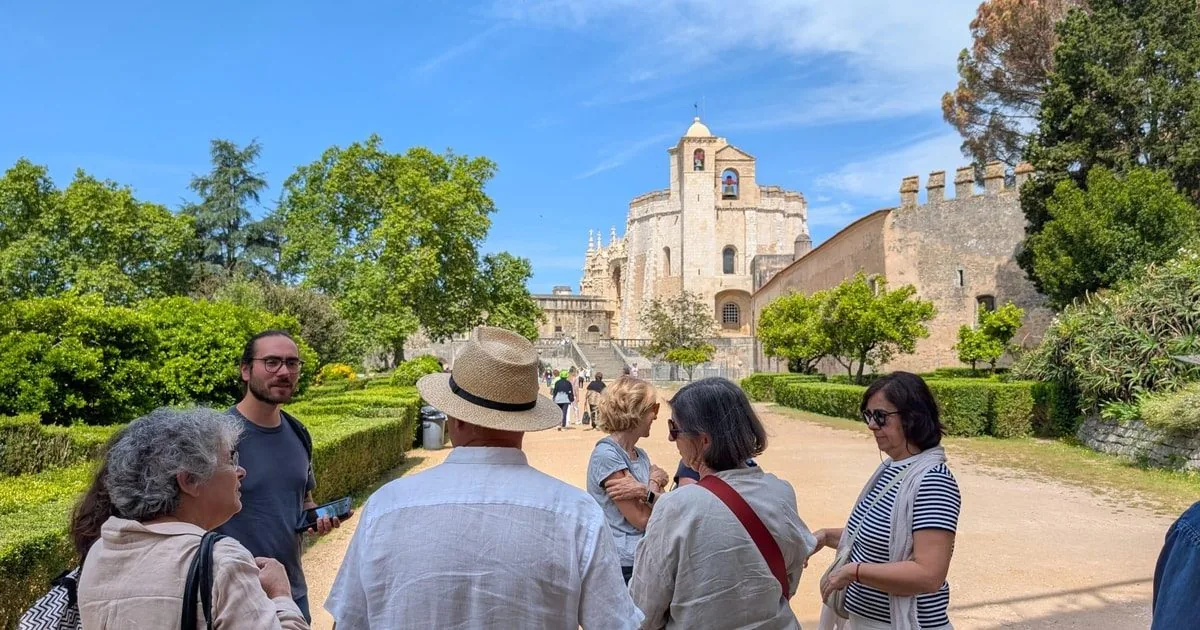 The whole day, in Tomar
Tomar and the Templars Convent of Christ: A Historical Tale
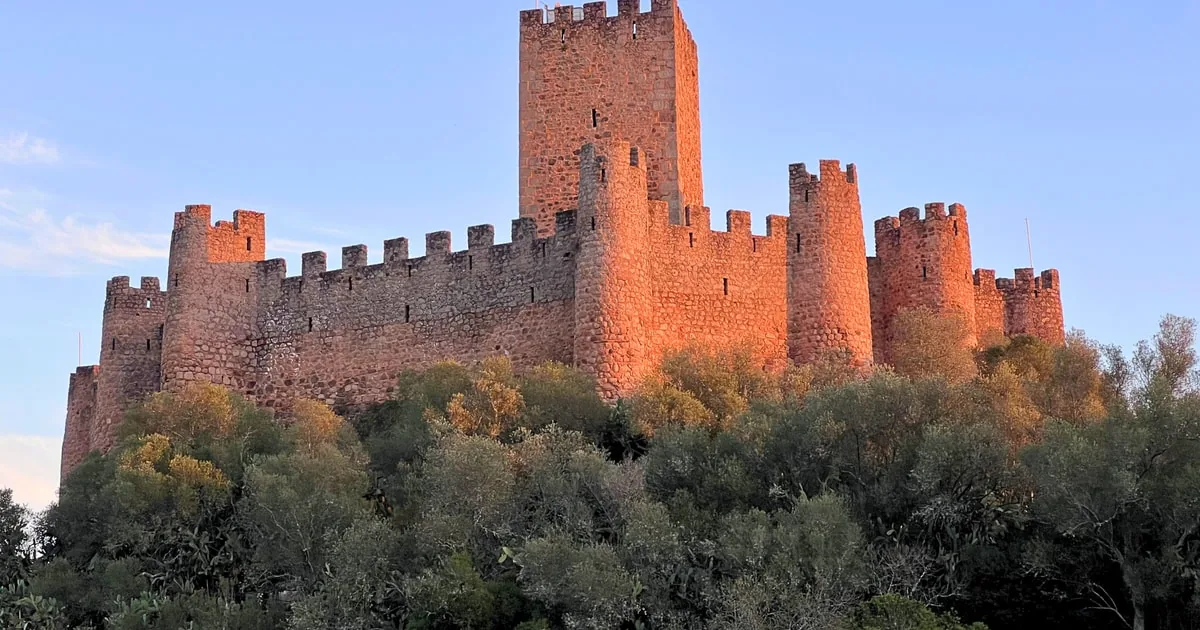 Templar-specialist guide
Lisbon: Knights Templar Tour - Almourol, Tomar and Convent of Christ
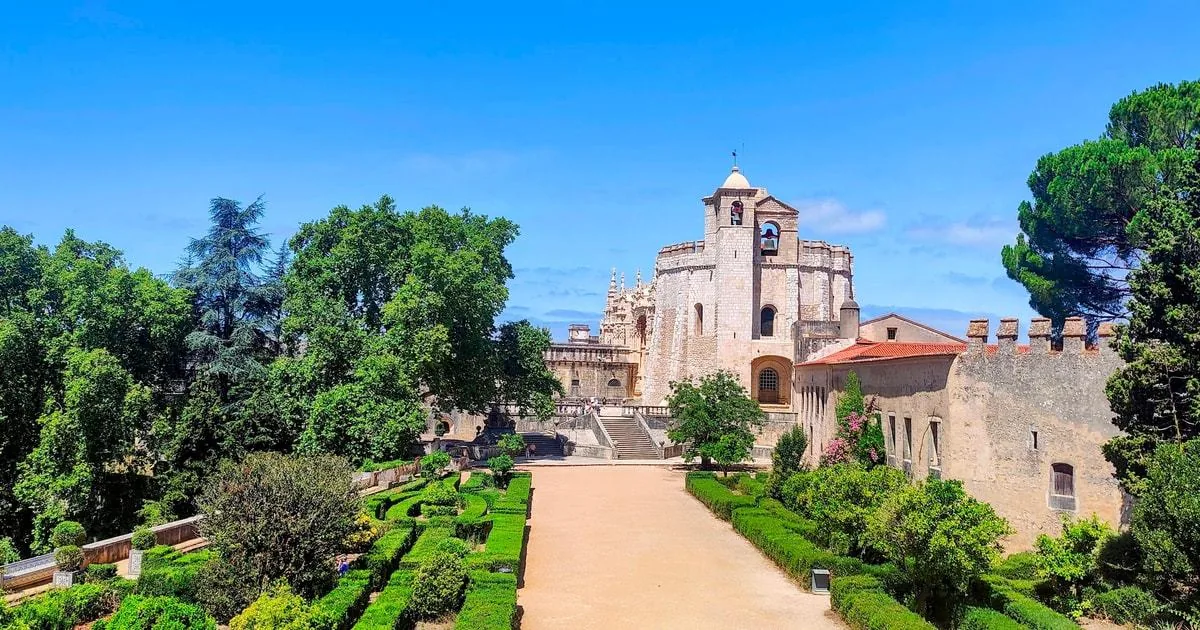 Convent and synagogue
Walking Tomar: Templar Secrets & Convent of Christ Included
Next: the suppression, in the papal documents, what happened in Portugal instead, and the men who built this castle.
Frequently asked questions
Are the Freemasons descended from the Knights Templar?
There is no documented descent. Freemasonry’s recorded origins are eighteenth-century and British, out of the stonemasons’ lodges, with Scotland first in the written record. Masonic Templar bodies themselves state that no historical evidence links them to the medieval order.
What do the Freemasons have to do with the Knights Templar?
A story with a traceable origin. Von Hund’s Rite of Strict Observance, from the 1750s and 1760s, promoted the myth that Freemasonry was started by Templar refugees. Freemasons meeting at Wilhelmsbad renounced their Templar origins in 1782, though not unanimously.
Did Ramsay say Freemasons came from the Knights Templar?
No. Ramsay’s oration of 1736/37 says “our ancestors, the Crusaders”, and the only order it names is the Knights of St John — the Hospitallers. The Scottish Rite’s own account says Ramsay’s Crusaders “morphed into” the Templars afterwards.
How long between the Templars and the first Grand Lodge?
The Templars were dissolved by Vox in excelso in 1312 and the first Grand Lodge was founded on 24 June 1717. That is four hundred and five years, with no continuous documentary chain of any kind across it.
Is the Convento de Cristo connected to Freemasonry?
No source of any standing connects them, including UNESCO, the operator, the Portuguese heritage authority, the municipality, the cultural encyclopaedia and both Wikipedias. The Charola was begun five hundred and fifty-seven years before the first Grand Lodge existed.
Are the Masonic Knights Templar the same as the medieval Knights Templar?
No, and the Masonic bodies say so themselves: there is no proof of direct connection between the ancient order and the modern order of that name. Where Masonic degrees reference the connection it is treated as ceremonial rather than historical.