Who was the first king of Portugal? Afonso Henriques — and it took the papacy until 1179 to agree
The chain, and what each link actually establishes
| What happened | When | What it actually settled |
|---|---|---|
| The first County of Portugal, under Vímara Peres | 868 | A county on a frontier, not a state |
| Alfonso VI grants the county to Henry of Burgundy | 1096 | As a fief – held from a superior, not owned |
| Battle of São Mamede | 24 June 1128 | Who governed the county. Nothing about León |
| Afonso styles himself Prince | 6 April 1129 | A title he gave himself |
| Battle of Ourique | 25 July 1139 | Acclaimed king by his own troops. The site is unknown |
| First surviving charter calling him rex | 1140 | The earliest document, not the earliest claim |
| Treaty of Zamora | 5 October 1143 | The document is lost. Sources disagree what it did |
| Portugal offered to Rome; Lucius II replies | 1143 and 1144 | The pope calls him duke |
| Manifestis Probatum, Alexander III | May 1179 | Kingdom, king, and the crown made hereditary |
Nine rows. Read the third column and the question “when did Portugal become a kingdom?” turns out to have four defensible answers and one legal one.
Ourique, and the part that is not history
Ourique is the battle every Portuguese schoolchild can name, and two things about it are worth saying plainly. The first: the site of the battle is not known. Not disputed between two candidate fields — unknown. The second: the famous parts did not happen.
The story has Christ appearing to Afonso before the fighting, five Moorish kings defeated, and the quinas — the five shields on the Portuguese arms — given as a memorial of it. All of that is absent from the earliest accounts, and Alexandre Herculano, the historian who went back to the sources in the nineteenth century, called it a pious fraud. What the record supports is a victory in 1139 after which his troops acclaimed him king. That is quite enough of a founding moment without an apparition attached to it.
Zamora, and the treaty nobody can read
The Treaty of Zamora, 5 October 1143, is where most accounts have Portugal becoming independent of León. Here is the difficulty: the treaty document is lost. What survives is later report of it, and the sources disagree about the substance — specifically about whether it ended León’s nominal overlordship or merely recognised Afonso’s royal style while leaving that overlordship intact.
What is clear is the sequence: two months after Zamora, and again the following spring, Afonso offered his territory to the Holy See — which is not the behaviour of a man who has just secured unambiguous independence from his cousin.
Why 1179 is the date that matters
Because of what the papacy said in 1144. Afonso had put himself and his lands under the protection of Rome; Lucius II addressed him as duke. Not king. The most powerful arbiter of legitimacy in Latin Europe looked at the acclamation of 1139 and the treaty of 1143 and declined to use the word.
It took another thirty-five years. In May 1179 Alexander III issued Manifestis Probatum, which calls Portugal a kingdom and Afonso a king, and makes the crown hereditary. That is the document that converts a battlefield acclamation into a dynasty, and it is why 1179 rather than 1139 or 1143 is the answer to “when did Portugal become a kingdom in the eyes of anyone but itself?” The exact day in May is disputed.
The Cortes de Lamego never happened. You will find an assembly of 1143 at Lamego said to have proclaimed Afonso king and laid down the laws of succession. It was invented by António Brandão in 1632, nearly five centuries later, and it was invented for a reason: Portugal was under Spanish rule and needed a founding constitution to point at. If a guide or a plaque mentions Lamego, that is the frame it belongs in.
What Portugal was called before it was Portugal
Immediately before: the County of Portugal, a county rather than a kingdom. The usage survives in the sources this site works from — Gualdim Pais, who founded the castle at Tomar, is recorded as born in 1118 at Amares in the County of Portugal, which dates the change to inside one man’s lifetime.
Further back the name itself is a port. Roman Gallaecia covered the north-west; the Suebi arrived in 409; and the settlement of Portus Cale, associated with Decimus Junius Brutus Callaicus around 136 BC, gives the word. Portucale becomes Portugale by the ninth century, and a county takes its name from a harbour at the mouth of the Douro.
Two etymologies you will meet are legend rather than fact: that Portugal means “beautiful port”, and that Cale is a goddess. Neither is supported.
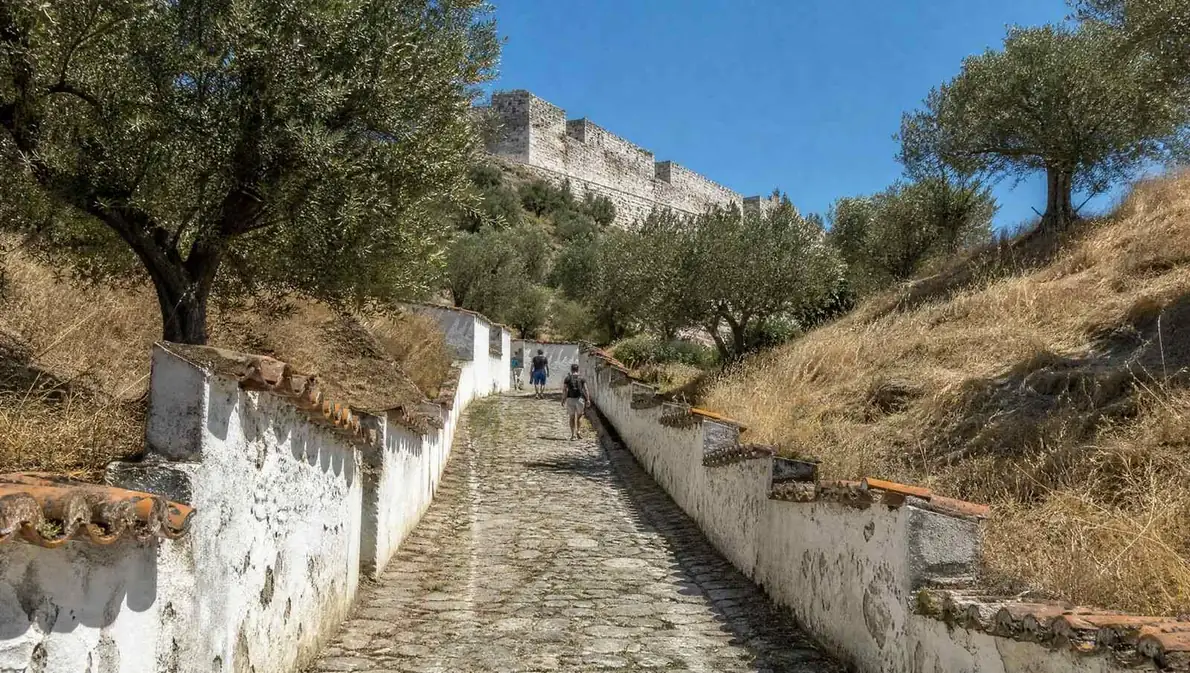
His actual connection to this building, and the correction inside it
Almost every account of Tomar has Afonso Henriques handing the Templars their Portuguese base. The documents are more interesting than that.
- Soure, 1128, was not his. The frontier castle of Soure was donated to the Temple on 19 March 1128 by Teresa, his mother, whom he defeated at São Mamede three months later. He confirmed the grant; he did not make it. Some sources argue 19 April for the date.
- Ceras, 1159, was his — and it was a settlement. In February 1159 Afonso donated the lands of Ceras to the Temple in the person of Gualdim Pais, in exchange for the Templars dropping their claims on Santarém. A king ending an argument with a powerful order by giving it land somewhere else, on a frontier that needed holding.
- Tomar, 1160. The castle at Ceras was in ruins. Rather than repair it, Gualdim Pais began a new one at Tomar on 1 March 1160, and the Convento de Cristo grew inside those walls (the Templars at Tomar).
Two claims you may hear have no sourced support: that Templars fought at Ourique, and that Afonso Henriques was himself a Templar. Both circulate. Neither is documented.
Who founded Portugal?
As a kingdom in law, Alexander III did, in 1179, by writing it down. As a country on the ground, Afonso Henriques did, by winning and by giving away frontier land to people who would hold it — which is how the Templars ended up on this hill. UNESCO’s criterion for inscribing this convent says the quiet part out loud: it was “originally conceived as a symbolic monument of the Reconquest”, and then, from the Manueline period, became “an inverse symbol: that of the opening of Portugal to exterior civilizations”.
That single sentence is the shortest history of Portugal you will find on any wall: a country that begins as a frontier and turns into a sea route, with the same building doing both jobs (the order that made the second half happen).
His dates, and why there are three
Afonso Henriques died on 6 December 1185. His birth year is disputed between 1106, 1109 and 1111, and his birthplace between Guimarães, which is the traditional answer, Viseu and Coimbra. If you want a single figure, “about 1109” is a fair one. All three are given here, because that is what the record offers (why the arguments are the reason to come).
If you want the kings, get a guide
This is one of the places where the fifteen euros and the guide separate cleanly. The monument does not explain the monarchy to you; one reviewer of the plain ticket wrote that she “expected more than explanatory panels”. Reviewers of the guided listings, by contrast, keep describing exactly this material. Samantha learnt about “the order of Christ, the kings and major figures”; Audrey’s guide was “very well-versed in the history of the Templars, the Order of Christ and Portugal itself”, and her family aged eleven to forty-eight all followed it. That day trip is 5.0 on 75 ratings (what a guide adds).
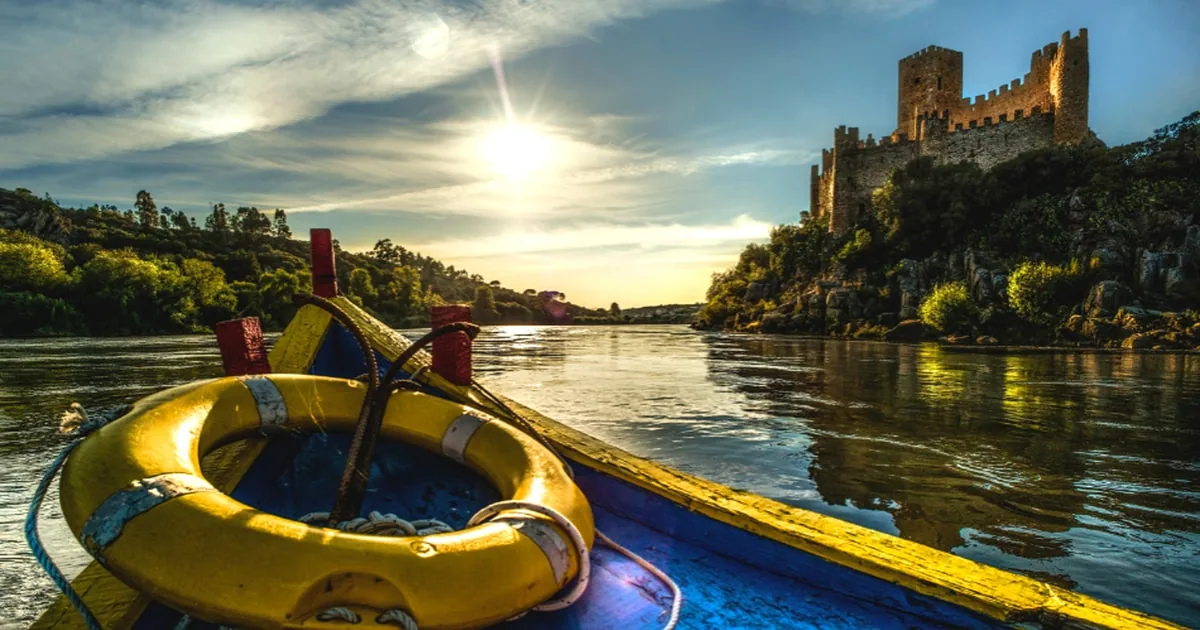 Ticket and lunch in
From Lisbon: Tomar, Christ Convent & Almourol Castle Tour
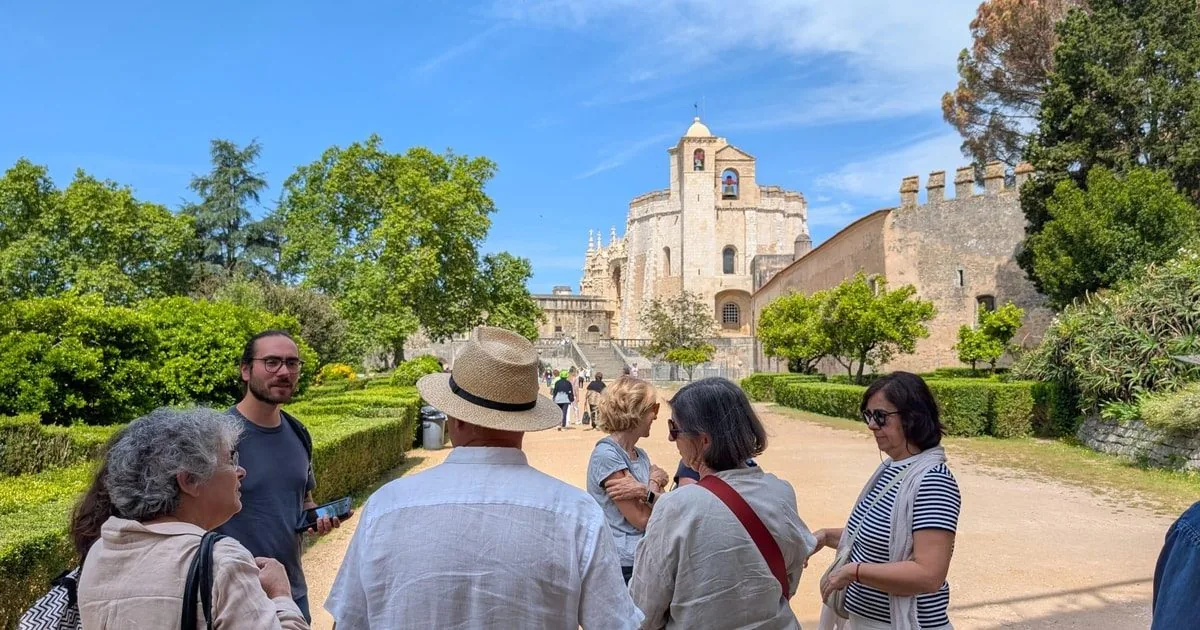 The whole day, in Tomar
Tomar and the Templars Convent of Christ: A Historical Tale
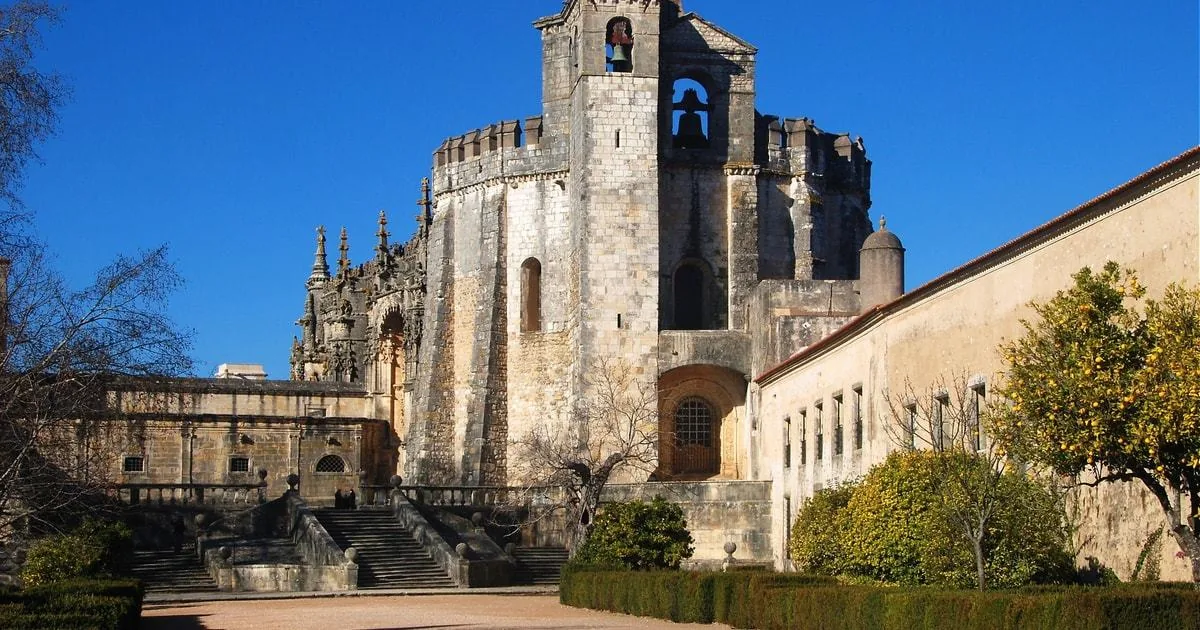 Cheapest with a guide
Tomar: Walking Tour to Convent of Christ Small Group & Tickets
Next: the order he settled on this frontier, what happened to it, and what replaced it in Portugal.
Frequently asked questions
Who was the first king of Portugal?
Afonso Henriques. His troops acclaimed him king after the battle of Ourique in 1139, and the first surviving charter calling him rex dates from 1140 — but the papacy did not call Portugal a kingdom until Manifestis Probatum in 1179, and in 1144 it had called him a duke.
What was Portugal called before it was Portugal?
The County of Portugal, a county rather than a kingdom, granted as a fief in 1096. The name goes back to Portus Cale, a harbour associated with Decimus Junius Brutus Callaicus around 136 BC; Portucale becomes Portugale by the ninth century.
Who founded Portugal?
Afonso Henriques founded it in fact; Pope Alexander III recognised it in law in Manifestis Probatum in 1179, which also made the crown hereditary. On the ground the frontier was held by military orders he granted land to, which is why there is a Templar castle at Tomar.
Did Afonso Henriques become king at the Battle of Ourique?
His troops acclaimed him king after it, in 1139. The site of the battle is not known, and the famous elements — the apparition of Christ, the five Moorish kings, the quinas on the arms — are absent from the earliest accounts and were judged a pious fraud by Herculano.
What did the Treaty of Zamora do?
That is genuinely unclear, because the treaty document is lost. Sources disagree about whether the 1143 settlement ended León’s nominal overlordship or only recognised Afonso’s royal style. Two months later he was offering Portugal to the papacy.
Was there really a Cortes de Lamego?
No. The assembly of 1143 said to have proclaimed Afonso king and fixed the succession was invented by António Brandão in 1632, when Portugal was under Spanish rule and wanted a founding constitution to point at.
What did Afonso Henriques have to do with the Convento de Cristo?
In February 1159 he granted the Templars the lands of Ceras, in exchange for their dropping claims on Santarém. The castle there was in ruins, so Gualdim Pais built a new one at Tomar from 1 March 1160. Soure, in 1128, had been his mother’s donation rather than his.