The Janela do Capítulo at Tomar: what Manueline means, and why nobody can prove who carved it
What “Manueline” actually means
It is named for a king. Manuel I reigned while Portuguese ships were opening the sea routes, and the style that carries his name is what Portuguese architecture did in that period. UNESCO places it in the sequence of things this one building contains — “Romanesque, Gothic, Manueline, Renaissance, Mannerist and Baroque elements” — and characterises the window and the oculus above it as “two renowned bays, a window and an oculus combining Gothic and Moorish influences, thereby offering the most accomplished expression of Manueline decorative style”.
That is UNESCO’s definition of the style. The Portuguese heritage authority calls the window a “símbolo da expansão marítima portuguesa” — a symbol of Portuguese maritime expansion — and describes it as “enigmatic and profoundly symbolic”. That is an official heritage body saying, in its own publication, that it does not fully know what the carving means.
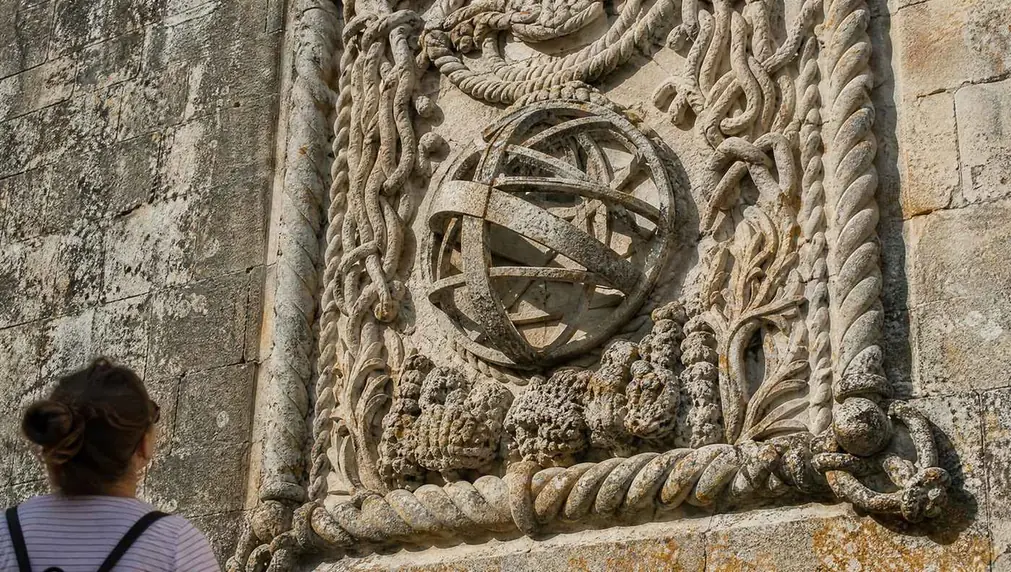
Who carved it, and why the answer keeps moving
Diogo de Arruda is usually named as the carver of this window. Here is what stands behind that attribution.
| Source | Who it credits | What it actually establishes |
|---|---|---|
| The operator, Museus e Monumentos | Diogo de Arruda | Credits him with the Manueline nave, finished by João de Castilho |
| UNESCO | “Diego de Arruda” | Credits him with the choir structure, not separately with the window |
| e-cultura, Google Arts & Culture | Arruda | Catalogue attribution, following tradition |
| Wikipedia, English | João de Castilho | And dates it two decades later, incompatibly |
| eViterbo, the scholarly database | Nobody | Documents Arruda as master of works at Tomar while the window was built, never the window |
| Rafael Moreira, Monumentos | Somebody else | “É proposta uma nova autoria” – a new authorship is proposed |
Six sources, four positions, and the one built on archive documents is the one that credits nobody.
Read the third column downwards and the shape of the problem appears. Diogo de Arruda is genuinely documented at this building: the scholarly database, drawing on Viterbo’s dictionary of Portuguese architects, records him as mestre de obras at the Convento de Cristo during the years the window was built, 1510–1513. What it does not do — what no document anybody has produced does — is say that he designed this window. Being the master of works on a site where a famous thing was carved is not the same as having carved it.
Then there is the scholarship. Rafael Moreira’s study of the window in Monumentos sets out to trace its literary sources, its authorship and its meaning, and its abstract says outright that “é proposta uma nova autoria” — a new authorship is proposed. The abstract does not name his candidate, so the full article is the place to read his argument and his conclusion.
So the accurate sentence is: traditionally credited to Diogo de Arruda, who was master of works here at the time; the attribution is not documented and is actively contested. You may hear Arruda named as the carver; that follows the catalogue rather than the archive. It is a good story either way, and it is a better one when you know it is unresolved.
The detail almost nobody mentions
Moreira’s abstract also records that the window was descoberta — uncovered — in the nineteenth century. The most famous single image in Portuguese art has been visible in its present state for well under two hundred years. He quotes R. Smith calling it “o motivo mais conhecido na arte portuguesa”, the best-known motif in Portuguese art, which is a large claim about an object that was under something for much of its life.
How to actually see it
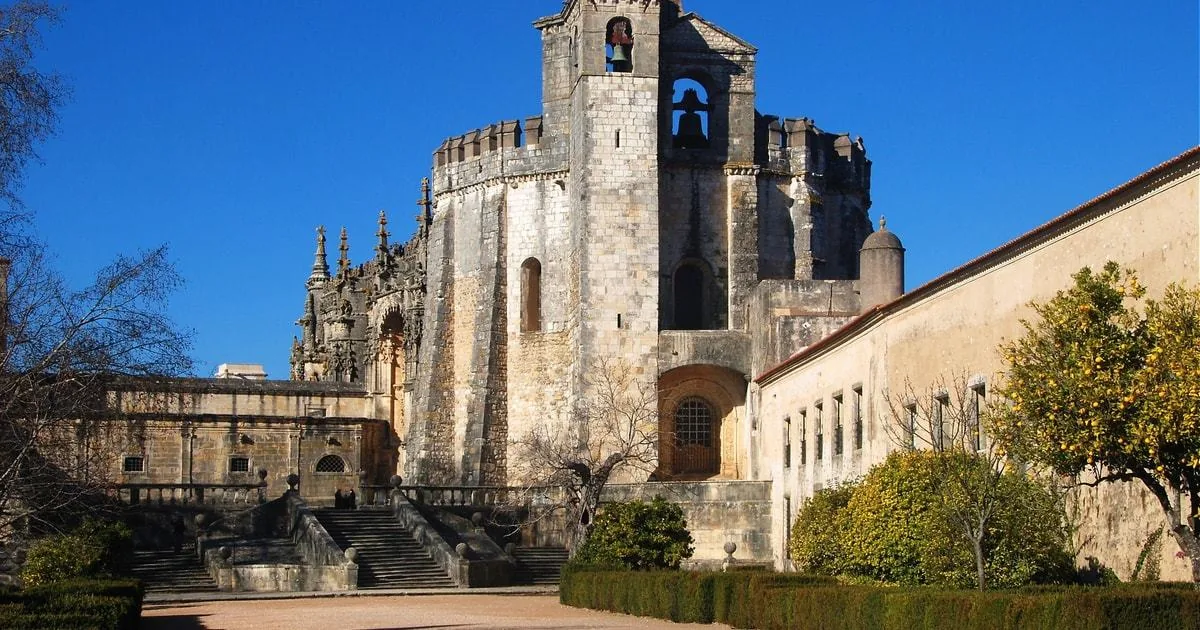
It is outside. This is the single most common way to miss it: visitors do the Charola, walk into the nave, admire the nave, and leave the site having never gone out into the courtyard on the west side and looked up. The window sits in the elevation of the Chapter House, below an oculus, and it wants morning or midday light and a step or two backwards. Take the time; it is what the carving was made for (where it comes in the route).
One more caution about counting. The Tomar town council calls this “the most symbolic of the five windows”, a count that other sources do not give (the same problem, with cloisters).
 Cheapest with a guide
Tomar: Walking Tour to Convent of Christ Small Group & Tickets
 Convent and synagogue
Walking Tomar: Templar Secrets & Convent of Christ Included
 The whole day, in Tomar
Tomar and the Templars Convent of Christ: A Historical Tale
Next: the round church it was built on to, the cross and the symbols, and the order whose wealth paid for it.
Frequently asked questions
What is the Manueline window at Tomar?
The Janela do Capítulo, the Chapter House window on the west front of the Manueline church at the Convento de Cristo, built 1510–1513 on the heritage authority’s dating. It is the most reproduced piece of carving in Portugal, and you view it from the courtyard outside.
Who carved the Janela do Capítulo?
Disputed. Diogo de Arruda is the traditional credit and he is documented as master of works at Tomar in those years — but no document attributes the window to him, English-language sources credit João de Castilho instead, and a study in Monumentos proposes a new author altogether.
What is Manueline architecture?
The Portuguese style named for King Manuel I, under whom the sea routes were opened. UNESCO describes the Tomar window and oculus as combining Gothic and Moorish influences and calls them the most accomplished expression of Manueline decorative style. The heritage authority frames the Tomar window as a symbol of Portuguese maritime expansion.
Where is the Manueline window in the Convento de Cristo?
On the exterior of the Manueline church, in the elevation of the Chapter House, below an oculus. You have to go outside into the courtyard on the west side and look up. Visitors who stay indoors walk straight past it.
Why is the Tomar window famous?
Because of what it does with stone at the moment Portuguese ships were crossing oceans. UNESCO calls the window and the oculus above it the most accomplished expression of Manueline decorative style; the heritage authority calls it a symbol of Portuguese maritime expansion, and also “enigmatic”.
When was the Janela do Capítulo built?
The Portuguese heritage authority gives 1510–1513, and the scholarly study of the window agrees. English Wikipedia puts it around two decades later and credits a different man, which is incompatible with that dating and with the documented career of the architect usually named.